Reducer
def Reducer(
    *args, **kwargs
):The criteria implemented come from this paper.
def Criteria(
    f:Callable[[torch.Tensor], torch.Tensor], # Transform applied to the weights
    reducer:Callable=mean, normalizer:Callable | None=None, needs_init:bool=False, needs_update:bool=False,
    output_fn:Callable[[torch.Tensor, torch.Tensor], torch.Tensor] | None=None, # Combines current and reference weights
    return_init:bool=False, scale:dict[nn.Module, torch.Tensor] | None=None, needs_data:bool=False,
    data_fn:str='l2_norm', # Activation statistic to collect: 'l2_norm', 'max', 'mean'
):
Evaluates neural network parameters based on various criteria for pruning
def magnitude_criteria(
    transform_fn, **kwargs
):
Create a criteria based on weight magnitude transformation.
demo_model(random)
demo_model(large_final)
demo_model(squared_final)
demo_model(small_final)
def init_based_criteria(
    transform_fn, output_fn:NoneType=None, return_init:bool=False, **kwargs
):
Create a criteria that compares current weights to initial weights.
demo_model(large_init)
demo_model(small_init)
demo_model(large_init_large_final, 0.8)
demo_model(small_init_small_final)
demo_model(magnitude_increase, 0.6)
demo_model(movement)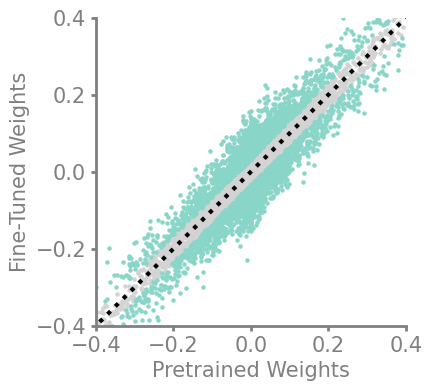
movmag = init_based_criteria(noop, output_fn=lambda x,y: torch.abs(torch.mul(x, torch.sub(x,y))))demo_model(movmag)
def update_based_criteria(
    transform_fn, output_fn:NoneType=None, **kwargs
):
Create a criteria that compares current weights to previous iteration weights.
The following criteria use an updating value of the weights, i.e. the value from the previous iteration of training, instead of the initialization value to better capture the training dynamics.
demo_model(updating_magnitude_increase)
demo_model(updating_movement, 0.5)
demo_model(updating_movmag)
The following criteria use input activation statistics collected during a calibration pass, providing data-aware importance scoring.
Wanda (Sun et al. ICLR 2024) scores weight importance as |W| × ‖X‖₂ — the product of weight magnitude and input activation L2 norm. Best for one-shot post-training sparsification. Requires calibration data passed via Sparsifier(data=...).
def activation_criteria(
    transform_fn, data_fn:str='l2_norm', **kwargs
):
Create a criteria that uses activation statistics to weight scores
updating_magnitude_increase = Criteria(torch.abs, needs_update=True, output_fn= lambda x,y: torch.abs(torch.sub(x,y)))

demo_model(updating_magnitude_increase)
updating_magnitude_increase = Criteria(torch.abs, needs_update=True, output_fn= lambda x,y: torch.sub(x,y))

demo_model(updating_magnitude_increase)
updating_magnitude_increase = Criteria(torch.square, needs_update=True, output_fn= lambda x,y: torch.abs(torch.sub(x,y)))

demo_model(updating_magnitude_increase)
updating_movmag = Criteria(noop, needs_update=True, output_fn=lambda x,y: torch.abs(torch.mul(x, torch.sub(x,y))))
demo_model(updating_movmag)
updating_movmag = Criteria(noop, needs_update=True, output_fn=lambda x,y: torch.abs(torch.mul(torch.square(x), torch.sub(x,y))))
demo_model(updating_movmag)
updating_movmag = Criteria(torch.square, needs_update=True, output_fn=lambda x,y: torch.abs(torch.mul(x, torch.sub(x,y))))
#updating_movmag = Criteria(noop, needs_update=True, output_fn=lambda x,y: torch.mul(x, torch.sub(x,y)))
demo_model(updating_movmag)
updating_movmag = Criteria(torch.abs, needs_update=True, output_fn=lambda x,y: torch.abs(torch.mul(x, torch.sub(x,y))))
#updating_movmag = Criteria(noop, needs_update=True, output_fn=lambda x,y: torch.mul(x, torch.sub(x,y)))
demo_model(updating_movmag, 0.3)
updating_movmag = Criteria(torch.abs, needs_update=True, output_fn=lambda x,y: torch.mul(x, torch.sub(x,y)))

demo_model(updating_movmag, 0.8)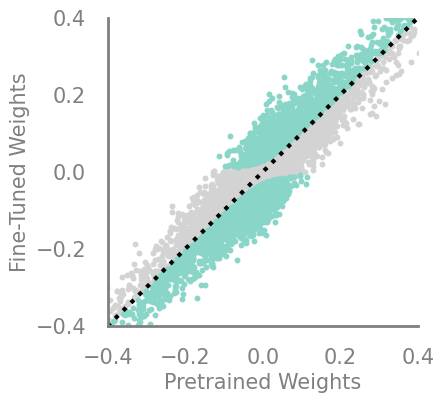
updating_movmag = Criteria(torch.square, needs_update=True, output_fn=lambda x,y: torch.mul(x, torch.sub(x,y)))

demo_model(updating_movmag)
updating_movmag = Criteria(noop, needs_update=True, output_fn=lambda x,y: torch.mul(x, torch.sub(x,y)))

demo_model(updating_movmag)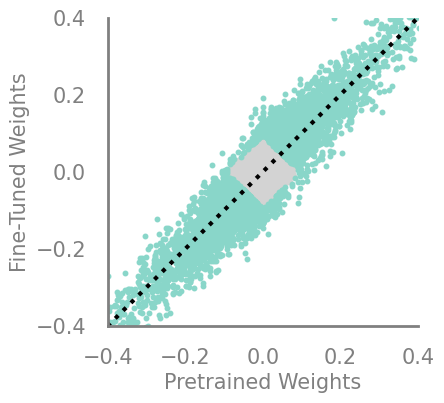
updating_movement = Criteria(noop, needs_update=True, output_fn= lambda x,y: torch.abs(torch.sub(-x,y)))
demo_model(updating_movement, 0.5)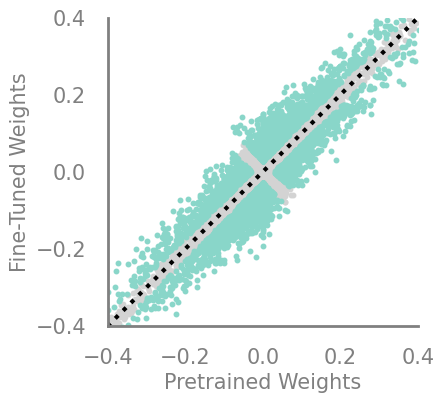
updating_movement = Criteria(torch.abs, needs_update=True, output_fn= lambda x,y: torch.abs(torch.sub(-x,y)))
demo_model(updating_movement)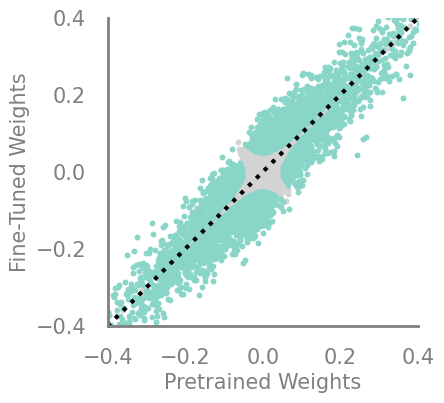
updating_movement = Criteria(torch.abs, needs_update=True, output_fn= lambda x,y: torch.abs(torch.cosh(torch.sub(x,y))))
demo_model(updating_movement)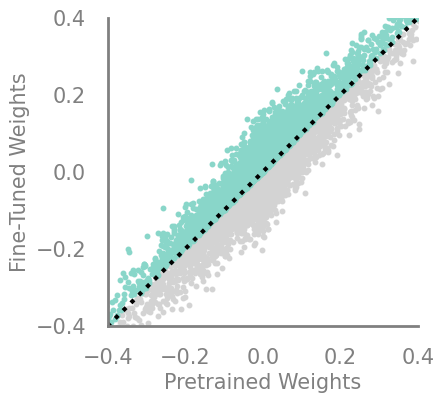
updating_movement = Criteria(torch.square, needs_update=True, output_fn= lambda x,y: torch.abs(torch.sub(x,y)))
demo_model(updating_movement)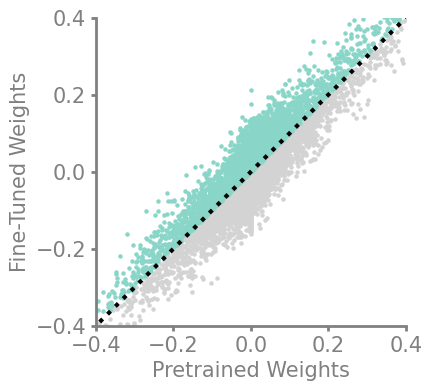
updating_movement = Criteria(noop, needs_update=True, output_fn= lambda x,y: torch.sub(x,y))
demo_model(updating_movement)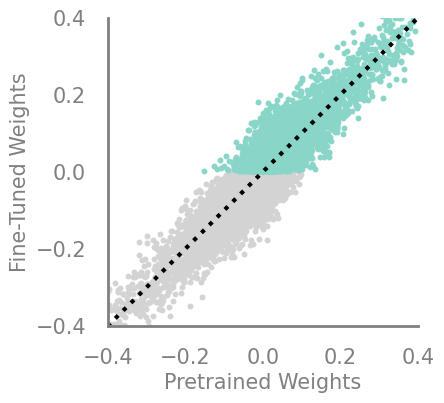
mine = partial(torch.pow, exponent=4)large_final = Criteria(torch.frac)
demo_model(large_final)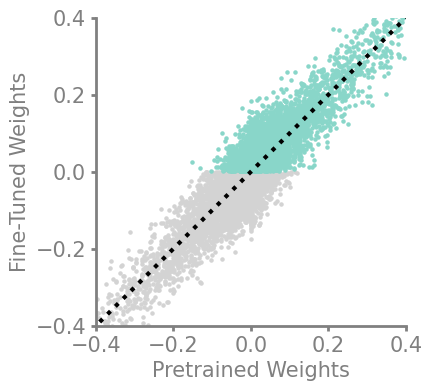
def grad_crit(
    m:nn.Module, g:str, # granularity specification
)->torch.Tensor:
First order Taylor expansion criterion for weight importance (Nvidia Taylor Pruning)
scores = torch.randn(100).abs()
normed = Normalizer.standardization(scores)| Criteria | Data-Aware | Best For | Requires |
|---|---|---|---|
| large_final | No | General-purpose magnitude pruning | Nothing |
| wanda | Yes | Post-training one-shot pruning | Calibration data |
| movement | No | During-training pruning | Initial weights |
| grad_crit | No | Gradient-informed pruning | Gradients |
| random | No | Baseline comparison | Nothing |
Tests live in nbs/tests/test_criteria.ipynb.